
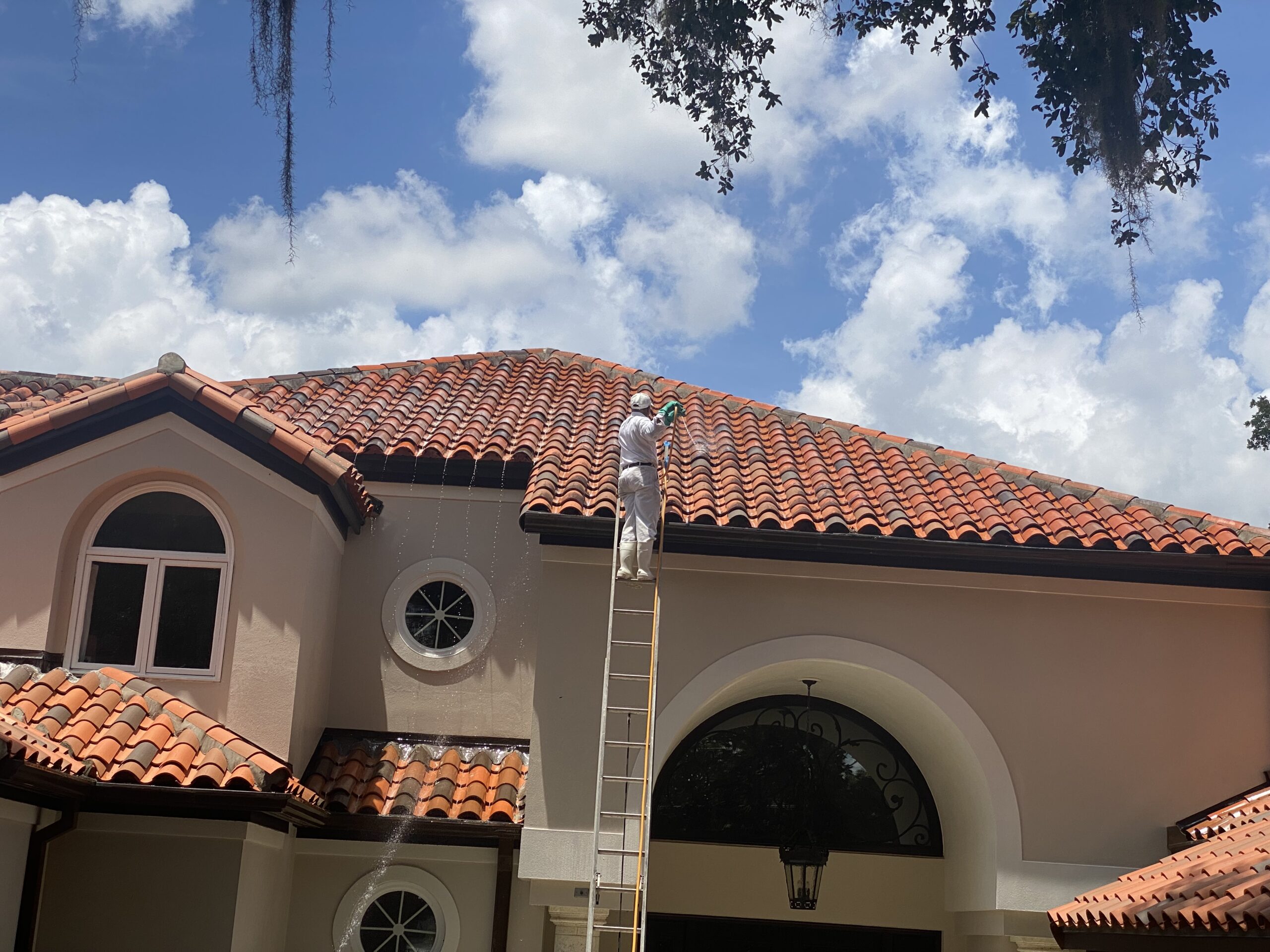
Benefits of Roof Cleaning, Roof Cleaning
Softwashing vs. Pressure Washing Roofs: What’s Safe for Your Orlando Roof Type
Florida’s sun-drenched climate is paradise for homeowners. Unfortunately, it’s also the ultimate breeding ground for algae, mold and ugly dark roof streaks.
Whether your Orlando home features asphalt shingles, clay tile, concrete or standing-seam metal, one thing is certain: picking the wrong roof cleaning Orlando technique can ruin your roof fast.
High-pressure washing often leads to permanent structural damage and eye-watering repair bills.
The verdict among Florida roofing pros isn’t even close. Softwashing is the gold standard for every major residential roof type in the Sunshine State, while high-pressure washing poses severe risks across the board.
Here is what you need to know to keep your roof safe, clean and intact.
Why Florida Roofs Suffer (Regardless of Material)
Heat, extreme humidity and intense downpours fuel the rapid growth of Gloeocapsa magma – the black algae responsible for those dark, unsightly streaks. Throw in lichen and moss, and your roof becomes a living ecosystem.
- Asphalt Shingles: Packed with limestone filler that black algae actively eats.
- Clay and Concrete Tiles: Highly porous surfaces with overlapping barrel curves where algae spores anchor deep.
- Metal Roofs: Trap salt-air film and organic debris that dull factory finishes and hold moisture along panel seams.
Why Softwashing Works Best for Every Material
Softwashing pairs ultra-low water pressure with specialized, eco-friendly biocide solutions to break down dirt and kill organic growth without abusing your home.
- Treats the Cause, Not Just the Stain: Cleans deep into tile pores, shingle matrices and metal seams to destroy algae at the cellular level.
- Protects Your Warranty: Adheres to strict cleaning standards set by major roofing manufacturers and the Asphalt Roofing Manufacturers Association (ARMA).
- Extends Clean Cycles: Keeps your roof clean 2 to 3 times longer than high-pressure blasting.
- Protects Your Property: Professional technicians pre-hydrate surrounding plants, lawns, and pool enclosures so your landscaping stays safe and green.
The Core Difference: Soft Washing vs. Pressure Washing
| Factor | Softwash (Recommended) | High-Pressure Wash (Risky) |
|---|---|---|
| Pressure Level | Ultra-low (<100–500 PSI, like a gentle hose) | High (1,500–4,000+ PSI) |
| Cleaning Method | Eco-friendly biocides kill algae at the root level | Heavy kinetic force blasts off surface debris |
| Best Used For | Shingles, tile (clay/concrete), metal, cedar | Concrete driveways, brick pavers, stone flatwork |
| Algae and Mold Kill | Eradicates spores entirely to delay regrowth | Leaves roots intact; algae returns within months |
| Longevity | 2-3+ years of clean, streak-free defense | Weeks to months before rapid regrowth |
| Material Safety | Safe for all roof materials | Cracks tiles, strips shingle granules, scratches metal |
How High Pressure Damages Specific Roof Materials
High-pressure cleaning doesn’t just wash your roof; it inflicts brutal, material-specific damage depending on what you have installed.
Asphalt Shingles
- Granule Stripping: High PSI blasts away the protective mineral granules that shield your home from harsh UV rays and fire.
- Lifted Edges: Forceful jets push water right under shingle tabs, soaking the underlayment and causing hidden, costly leaks.
Clay and Concrete Roof Tiles
- Cracks and Misalignment: Blasting brittle tiles with high pressure easily cracks them or breaks mortar beds, creating direct paths for water intrusion.
- Stripped Glazes: High pressure strips off protective glazes and slurry coats. This makes the tile even more porous, causing algae to return twice as fast.
Metal Roofs
- Scratched Finish: Pressure washers can scratch or strip protective factory coatings (like Kynar 500), exposing raw metal to rapid salt-air corrosion.
- Seam Intrusion: Water forced at high pressure penetrates overlapping standing seams, driving moisture directly into the roof decking below.
Why Softwashing Works Best for Every Material
Softwashing pairs ultra-low water pressure with specialized, eco-friendly biocide solutions to break down dirt and kill organic growth without abusing your home.
- Treats the Cause, Not Just the Stain: Cleans deep into tile pores, shingle matrices and metal seams to destroy algae at the cellular level.
- Protects Your Warranty: Adheres to strict cleaning standards set by major roofing manufacturers and the Asphalt Roofing Manufacturers Association (ARMA).
- Extends Clean Cycles: Keeps your roof clean 2 to 3 times longer than high-pressure blasting.
- Protects Your Property: Professional technicians pre-hydrate surrounding plants, lawns, and pool enclosures so your landscaping stays safe and green.
Recommended Cleaning Frequency in Florida
- Tile and Metal Roofs: Every 24 to 36 months keeps biological buildup from setting into porous surfaces or seam joints.
- Asphalt Shingle Roofs: Every 18 to 24 months prevents black algae from eating away at limestone fillers.
- Shaded or Coastal Properties: Annual inspections and spot treatments may be beneficial due to heavy salt spray and tree overhang.
Keep Your Tile, Shingle or Metal Roof Safe with Central Florida’s Experts
Don’t risk cracked tiles, stripped shingles or scratched metal finishes with high-pressure blasting.
At Mallard Systems, we specialize in low-pressure softwashing tailored specifically for Central Florida homes – delivering a deep, gentle clean that lasts for years.
If you notice any signs that your roof needs cleaning, simply reach out to Mallard Systems today to request a free estimate. For over 30 years, our roof cleaning specialists have protected and preserved roofs just like yours throughout Orlando. Contact us today!


